
"rare Robusta"
1000 article(s) found

The unique quality of Italian concentrated blending and the flavor of Italian concentrated blending.
Commercial coffee trees planted are mainly divided into three categories: Arabica (Arabica), Robusta (Robusta) and Liberika (Liberica). Among them, Liberika (Liberica) is rarely seen because of its small output. It is generally believed that Arabica (Arabica) coffee beans grown at high altitude have elegant aroma and taste, while those grown at low altitude (Robusta)
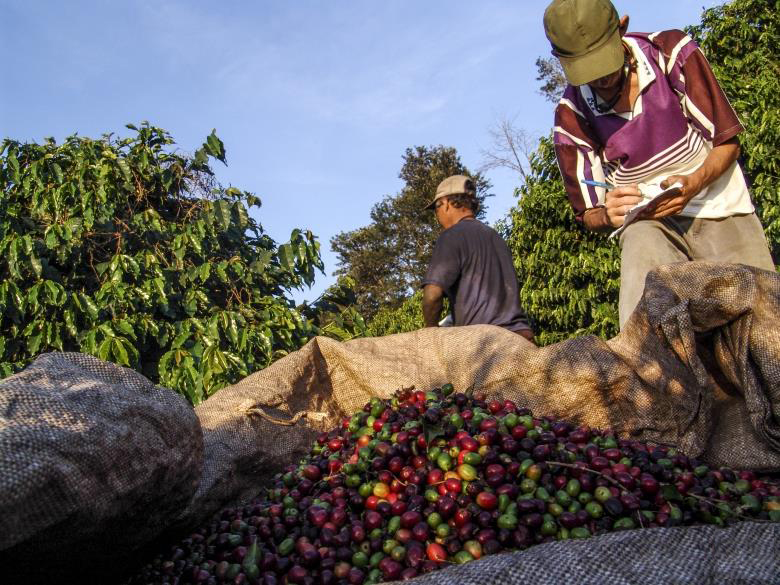
There are 60 coffee producing countries in the world! Northerly to Nepal, southernmost to Paraguay
Professional coffee knowledge exchange more coffee bean information please follow the coffee workshop (Wechat official account cafe_style) you should know the coffee story the vast majority of coffee producing countries are in the Tropic of Cancer and Tropic of Cancer, there are now about 60 countries; Arabica seed and Robusta seed are produced in 2 major varieties. Article = Chengmeitang Publishing editorial Department 60 coffee producing countries, mainly planted

The origin and development of Indonesian West Java coffee beans
Except for W.I.B., which is larger, the rest are smaller. The biggest difference lies in the processing after harvest, so there are some differences in appearance, aroma and taste. Java produces only a small amount of Arabica beans, while most of them are Romstar beans imported from Africa after rust disaster. This roasted coffee has a strong bitter taste but an extremely light aroma, although it has a low acidity and a good taste.

To make espresso, you should use mixed beans about Italian concentrated (espresso) blending and flavor.
Commercial coffee trees planted are mainly divided into three categories: Arabica (Arabica), Robusta (Robusta) and Liberika (Liberica). Among them, Liberika (Liberica) is rarely seen because of its small output. It is generally believed that Arabica (Arabica) coffee beans grown at high altitude have elegant aroma and taste, while those grown at low altitude (Robusta)

Sidamo production area introduced by Coffee Tree Plantation
Variety classification Arabica bean coffee tree can be divided into two main varieties: Arabica species (Coffea Arabica) and Robusta species (Coffea Robusta/Coffea Canephora). There are also some minor species, such as the Liberian species (Coffea Liberica) and the Alabasta species (Coffea Arabusta), but they are rare on the market. Rob.

An introduction to the characteristics of fine coffee beans in the manor area
Uganda is the country of origin of coffee grown in Robusta, but commercial cultivation of Arabica species here did not begin until early 1900. Today, there are still a large number of wild robusta coffee trees in Uganda, which is rare in cities in the world. As a landlocked country, the large coffee cultivation in Uganda is often interplanted, where coffee trees are mixed with food crops and rubber trees.

A brief introduction to the flavor, taste and aroma characteristics of nutty West Java coffee beans in Indonesia.
Java Coffee-Culture Java coffee beans are famous for their early Java coffee, which refers to Arabica coffee formerly produced on the island of Java. It has a strong aroma, low acidity, taste lubrication, combined with mocha coffee, the Java mocha mixed coffee has been popular and has become synonymous with top coffee. At that time, it was sold to Europe.

A brief introduction to the description of flavor and aroma characteristics of boutique coffee beans in West Java, Indonesia
Java Coffee-Culture Java coffee beans are famous for their early Java coffee, which refers to Arabica coffee formerly produced on the island of Java. It has a strong aroma, low acidity, taste lubrication, combined with mocha coffee, the Java mocha mixed coffee has been popular and has become synonymous with top coffee. At that time, it was sold to Europe.

A brief introduction to the cultivation of Java Coffee Fine Coffee Bean in its producing area
At present, 90% of the coffee beans exported from Indonesia are Robusta beans, and only 10% are Arabica. Before 1920, due to a major environmental disaster, Indonesian coffee varieties were replaced with Robusta beans, so Mandarin coffee in Sumatra is a rare Arabica bean, a treasure before it was discovered in the Blue Mountains. The output of such authentic products is also very small. There are in Java.

Sharp Bourbon / Wild Natural decaf Story: the difference between artificial decaf and Natural decaf
Professional barista communication please follow the coffee workshop (Wechat official account cafe_style) which kind of coffee has the lowest caffeine content? The answer is: pointed bourbon / wild natural decaffeinated coffee pointed bourbon / wild natural semi-decaf Bourbon Pointu coffee bean king: pointed bourbon Bourbon Pointu, one of the world's rare boutique coffee beans, small and expensive, but delicate texture

A Brief Introduction to the Grinding Degree and Roast Degree Treatment Method of Indonesian West Java Fine Coffee Beans with Nutty Flavor
Indonesian coffee is generally not crowned with Indonesian names, but directly with island names, such as Java and Sumatra, which were later brought to Jamaica by the British. By 1925, coffee cultivation had become a tradition in Central and South America. That same year, coffee was grown in Hawaii, the only coffee producer in the United States, and Hawaiian coffee is one of the best in the world. mesh

A brief introduction to the cultivation of boutique coffee beans in West Java, Indonesia with low acidity, geographical location, climate and altitude.
Among the Asian coffee-producing countries, Indonesia is a very noteworthy one. Indonesia is an island country in the Indian Ocean, the islands are distributed on both sides of the equatorial line, of which three islands: Java, Sumatra and Sulawesi produce the world's important coffee. In the mid-17th century, the Dutch brought coffee trees to Ceylon (Sri Lanka) and Java, Indonesia. India in the 18th century

Why "Arabica beans" is higher than "Robasta beans"?
Following Cafe (official Wechat account vdailycom) found that there are two main types of coffee trees: coffea arabica and coffea robusta/coffea canephora (rare on the market). Arabica (Coffea arabica) is the most traditional Arabica coffee variety. Originated in the east

A brief introduction to the treatment method of grinding degree and baking degree of Indonesian West Java boutique coffee beans with taste lubrication
At that time, Java coffee sold to Europe was a very special kind of coffee. At that time, it was shipped to Europe and the United States by sailboat, and the distance was long and the speed was slow, so it took a lot of time to transport. In this case, the coffee seems to have undergone a special fermentation and has a very unique taste. Later, when the ship replaced the sailboat, people drank because the transportation time was shortened.

What are the main types of coffee trees? what is the introduction to the types of coffee?
Arabica bean coffee tree can be divided into two main varieties: Arabica species (Coffea Arabica) and Robusta species (Coffea Robusta/Coffea Canephora). There are also some minor species, such as the Liberian species (Coffea Liberica) and the Alabasta species (Coffea Arabusta), but they are rare on the market.

What are the advantages of Arabella and Robusta, the big categories of world coffee beans? The common Arabica
Professional coffee knowledge exchange more coffee bean information please follow the coffee workshop (Wechat official account cafe_style) the world coffee bean classification of Arabella and Robusta advantages? How many kinds of Arabica are common? The world's three major coffee varieties are relatively brief: one. Types of coffee: coffee beans can be roughly divided into three categories: (1) Arabica (Arab)

Introduction of Coffee Origin-Asian "Laos, Thailand, Myanmar, Nepal"
Professional baristas Please follow the Coffee Workshop (Wechat official account cafe_style) as for Lao coffee produced in Laos, before the emergence of Europeans in Taiwan coffee enterprises, Lao coffee rarely appeared in Taiwan's raw bean trading system. However, the coffee culture in Laos also began before World War II. In 1927, 90% of the output of the Borofen volcano in Laos was exported to French businessmen and sold to Europe.

Flavor and taste characteristics of coffee varieties in Uganda introduction of high-quality coffee beans
Uganda is the country of origin of coffee grown in Robusta, but commercial cultivation of Arabica species here did not begin until early 1900. Today, there are still a large number of wild robusta coffee trees in Uganda, which is rare in cities in the world. As a landlocked country, the large coffee cultivation in Uganda is often interplanted, where coffee trees are mixed with food crops and rubber trees.

Practical raw bean knowledge
Arabica stock can be distinguished into washed and unwashed (correctly, Robusta stock can also be distinguished in this way, but it is rare for robusta stock to adopt washed). In the green state, the endocarp part of the center cut is brownish yellow, which is coffee beans treated by unwashed refining method, while it is grayish green.
Coffee Basics Practical Green Bean Knowledge
Arabica stock can be distinguished into washed and unwashed (correctly, Robusta stock can also be distinguished in this way, but it is rare for robusta stock to adopt washed). In the green state, the endocarp part of the center cut is brownish yellow, which is coffee beans treated by unwashed refining method, while it is grayish green.